Explore
Move through the monastery, inspect its spaces and pay attention to objects, doors, marks and documents.

Interactive historical mystery
A monastery. A mystery. An investigation board.
Year 1578.
Trade between Spain and the overseas territories is experiencing one of its busiest periods. Through the Franciscan network, books, liturgical materials, supplies and correspondence travel between monasteries on both sides of the Atlantic, all under the supervision of the Crown and the Church.
However, certain shipments bound for the Monastery of Santa Eulalia begin to cause growing concern among the ecclesiastical authorities. Several reports question the nature of some goods and suggest that part of them may be bypassing the official channels.
Under pressure from different sectors of the Church, the Franciscan Order decides to act with the utmost discretion.
To that end, Friar Jerónimo de Almorox is sent to the monastery, presenting himself as a scholar of the Order's musical heritage. His true mission is to discover what is really happening at Santa Eulalia without disturbing the life of the monastery.
But as he delves deeper into his investigation, he discovers that the monastery harbours another ancient mystery, whose origins lead him to the distant lands of Tír Chonaill, territory of the O'Donnell dynasty. A discovery that will shape the course of events and give new meaning to everything he believed he was investigating.
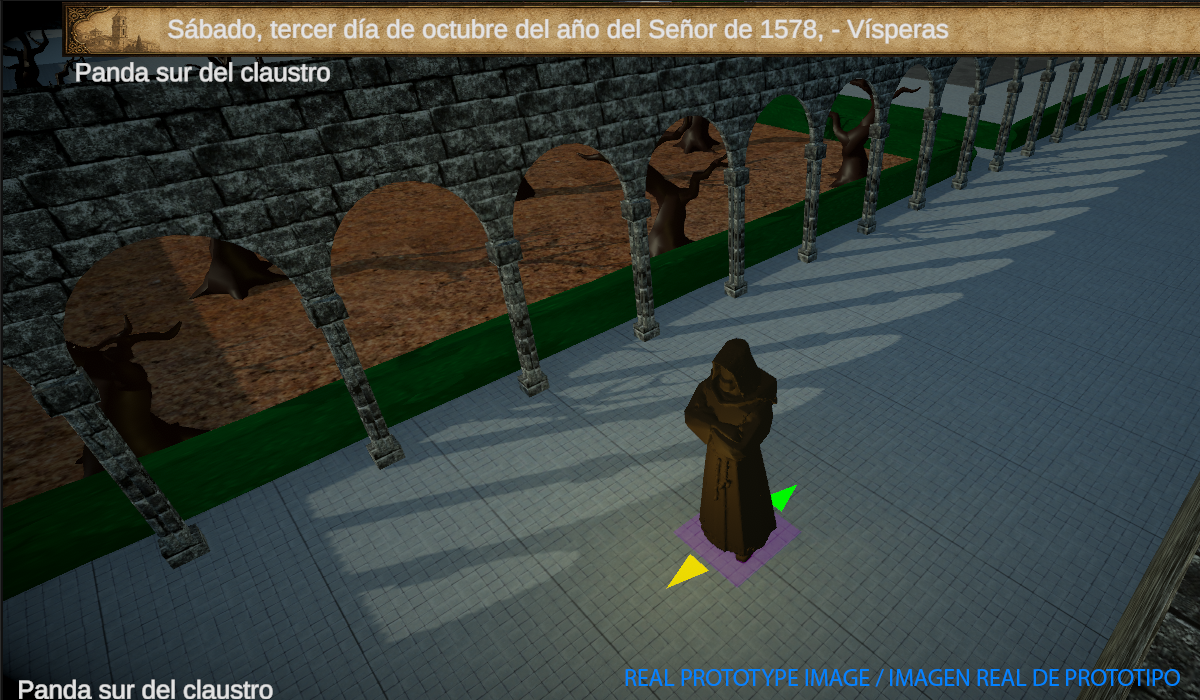
The player explores the Monastery of Santa Eulalia, examines objects, consults documents, detects contradictions and connects scattered information. Progress does not depend on speed or action, but on attention, interpretation and the ability to build a coherent explanation of the events.
The investigation advances through missions with specific objectives: explore an area, locate a document, examine an object, solve a code or perform an action that grants access to new information.
Some tasks are direct; others require interpreting previous clues or combining evidence found in different parts of the monastery. Progress is not about accumulating objects, but about building knowledge.
Move through the monastery, inspect its spaces and pay attention to objects, doors, marks and documents.
Find relevant details: letters, symbols, routines, changes, silences and absences.
Link clues that may seem incomplete, secondary or even contradictory when considered separately.
Interpret what you have discovered and build a provisional explanation of the events.
Overcome small logical challenges integrated into the investigation itself.
Understand new relationships and move closer to the truth hidden behind the events of 1578.
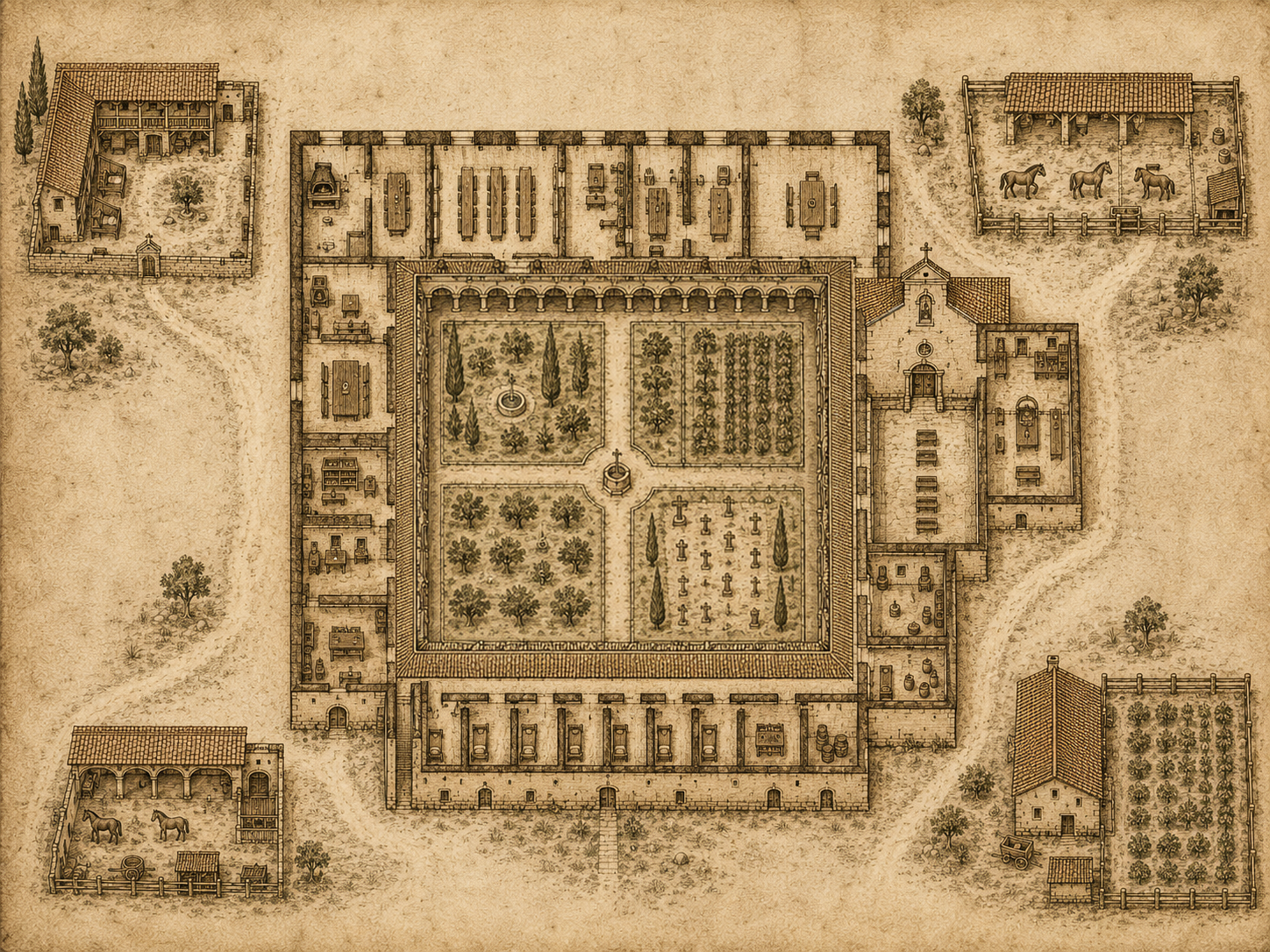
The monastery is not a backdrop: it is the structure of the mystery. Its rooms, objects, documents and events form a network of relationships that the player must put in order.
The investigation takes place within its walls, but many clues point towards events outside. Understanding what happened inside also requires reconstructing what happened beyond them.
Every room preserves memories. Every object holds a story. Every document can change everything.
Letters, records and manuscripts may confirm, contradict or open new lines of deduction.
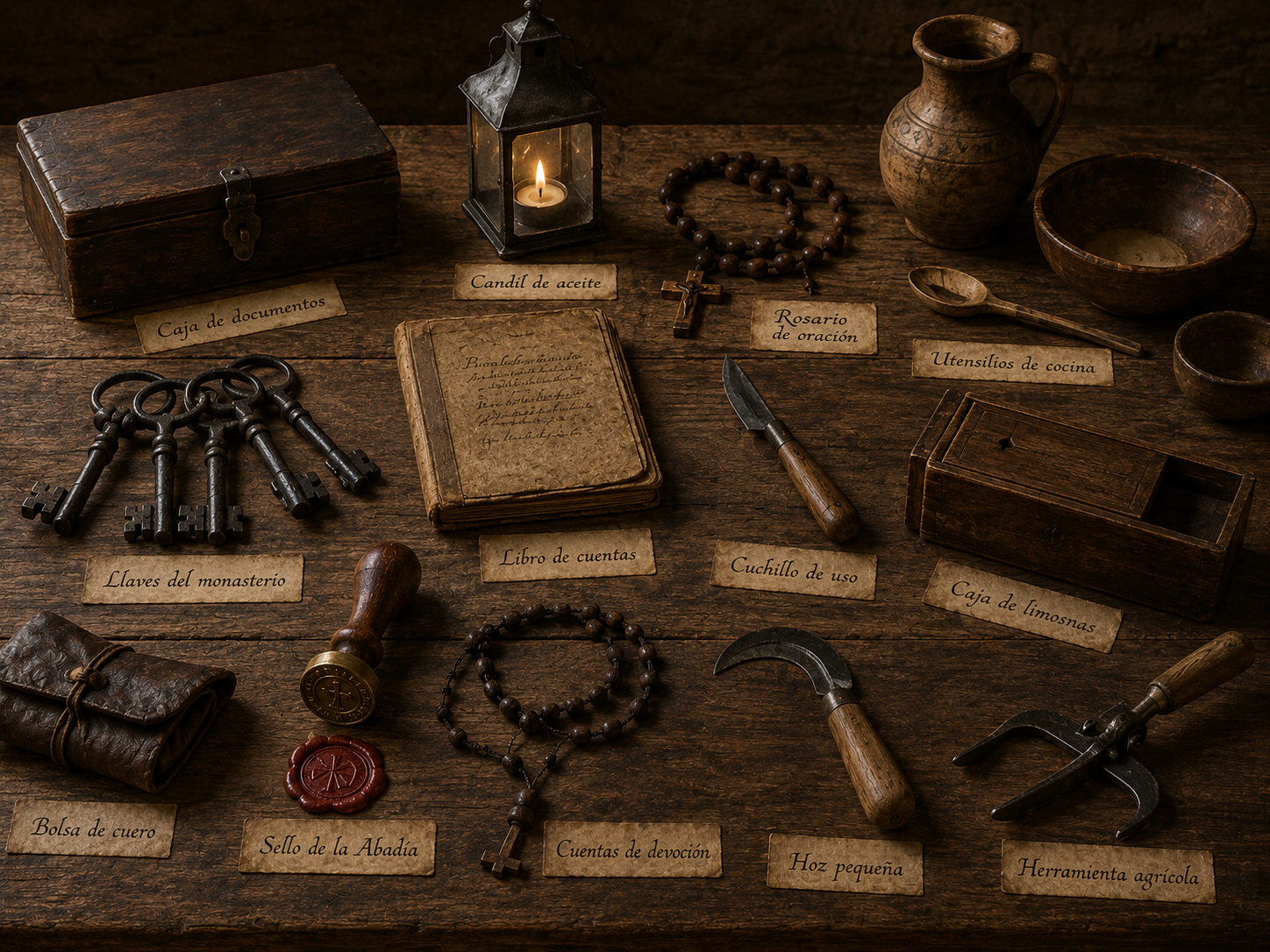
A utensil, a key or a tool may reveal uses, intentions or hidden movements.
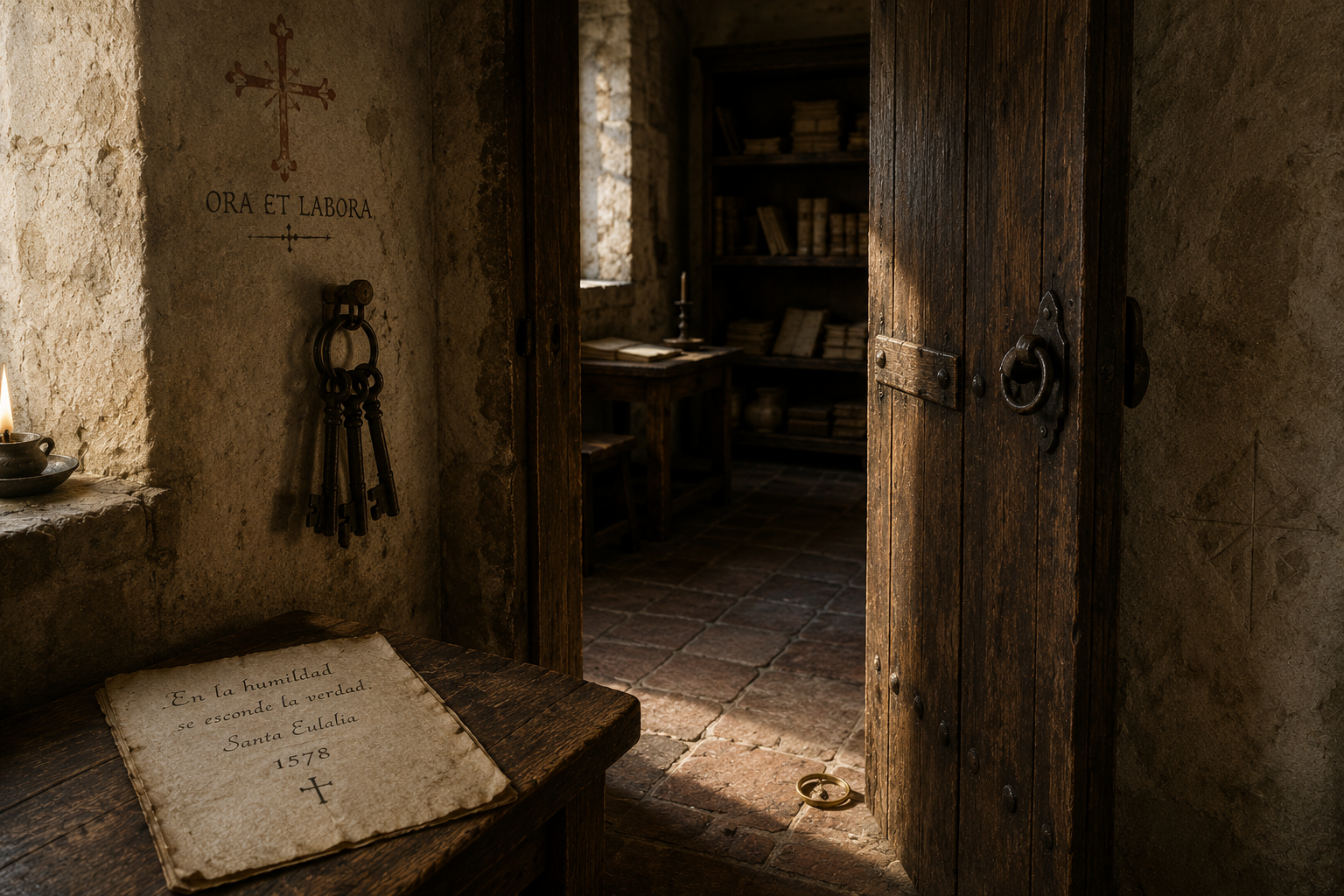
Marks, shadows, doors, traces and absences are also part of the monastery's language.
Totana 1578 is designed for players who enjoy observing, comparing information and reaching conclusions for themselves. The satisfaction lies not in being given an answer, but in discovering why that answer makes sense.
The adventure combines fiction and historical context to create a believable experience, where every element of the monastery may have narrative or deductive value.
Real places, dates and other references provide inspiration and context for a fictional story. Totana 1578 is not presented as an exact historical reconstruction or a documentary source.
Totana 1578 was conceived as an inclusive and accessible experience from the outset, so that people with visual or hearing disabilities, as well as any other player, can take part on equal terms in the process of investigation and discovery.